
Origin

The last land before the open sea

Continental Europe does not end quietly. It narrows, hardens, and reaches into the Aegean – until there is nothing left but rock, wind, and water. This is Cape Malea, the southeastern edge of the continent. Sailors respect it. Maps mark it. We live on it.

Explore the oil
VATIKA

A land that narrows, hardens, endures

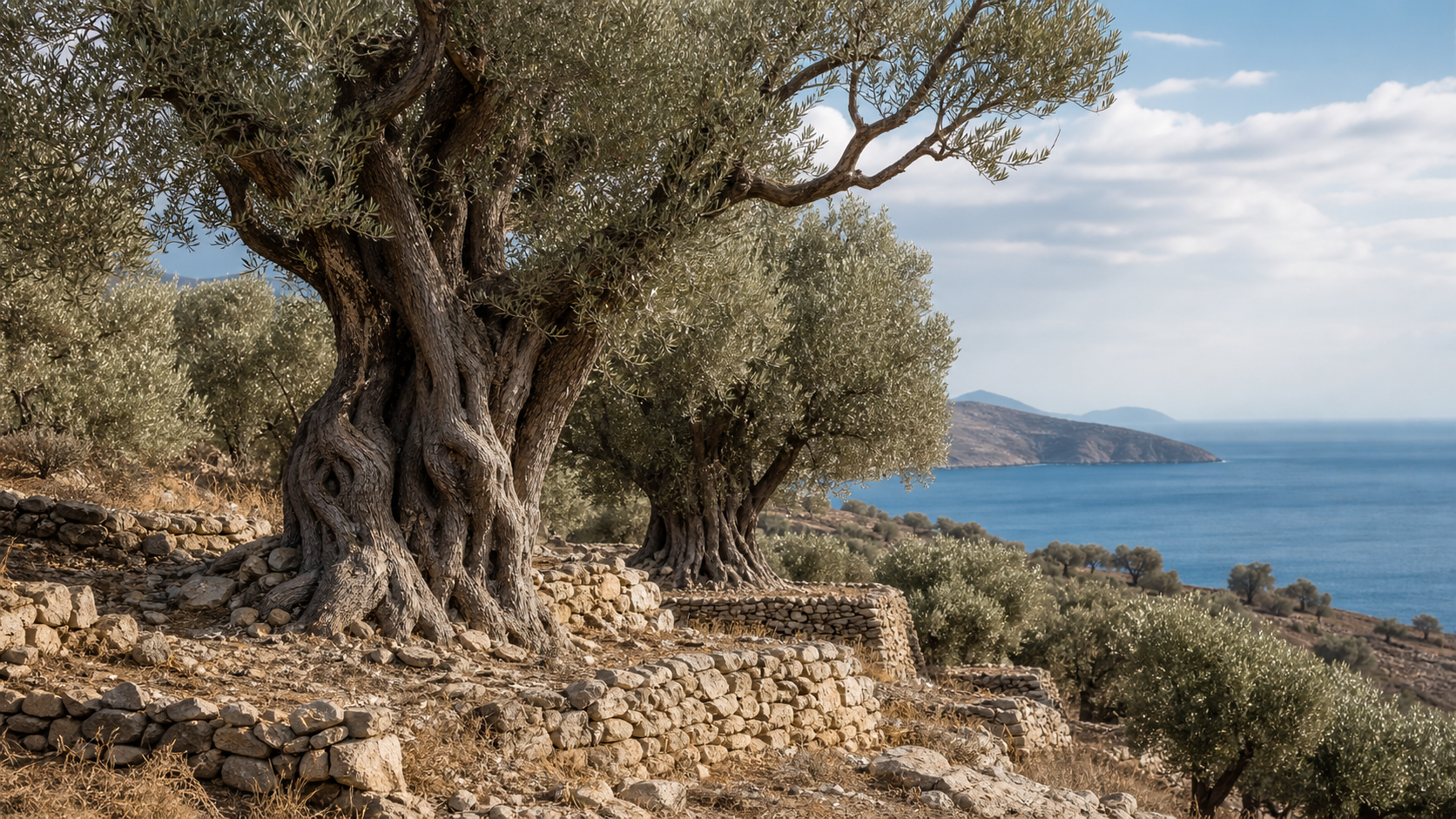
The heart of this edge is called Vatika — a landscape of stone terraces, low hills, and olive groves descending toward the sea. Across the strait lies the island of Elafonisos. Behind rise the dry slopes of the peninsula.

To the north lies Monemvasia, a place where olive cultivation reaches back through the Byzantine centuries. By the late 11th century, olive oil from the region was already leaving its port for distant markets — a centuries-old tradition that continues to connect this part of Laconia with the olive today.

This is not a generous landscape. It gives nothing away easily. But what it gives, it gives with unmistakable character — and no tree expresses that character more faithfully than the olive.

36°26′ NLatitude
23°05′ ELongitude
LaconiaGreece

The Elements

Stone – Wind – Salt – Sun

The trees grow in thin, stony soil. The wind comes from the sea and does not stop.

Salt carried through the air. The sun is generous and severe at once.
Elsewhere, these might be considered hardships. Here, they define the land.

They shape the tree, deepen the fruit, and leave their signature on every harvest.
Our olive oil does not taste of an easy land. It tastes of this place.

Shaped by this Place

In Vatika, each olive grows under the influence of a distinctive micro-terroir — stony soils, intense sunlight, limited water and winds carried in from the surrounding sea. These conditions interact with the natural character of each variety, shaping the way it grows, ripens and ultimately expresses itself in the oil.

The varieties may be known elsewhere. Their expression here belongs to this place.

Athinolia

The quiet signature of this land: a rare variety producing oils of remarkable elegance and complexity, with vibrant green aromas and a long, peppery finish.

Koroneiki

The emblematic variety of southern Greece grows beside it – vibrant, structured, and consistently expressive.

Kalamon

Best known as a table olive, Kalamon reveals a rarer olive-oil expression: delicate fruitiness, gentle herbal notes, and remarkable smoothness.

Wild Olive

The ancestor of the cultivated olive, deeply rooted in the Mediterranean landscape. In ancient Greek tradition, Hercules brought the wild olive to Olympia, where its branches became the symbol of victory at the Olympic Games.

A LAND WITH MEMORY

Long before there was a name, there was this land

Nearly two thousand years ago, the traveller Pausanias described this coast as the akra — the edge. The word endured. The families remained. The olive trees still stand.

Akra Riza is rooted in this continuity — in a land shaped over centuries, in olive trees passed from one generation to the next, and in the people who continue to care for them today.

The name is new. The roots are not.

Meet the growers Taste the place

MAP

Vatika, Laconia

The southeastern edge of continental Europe, where the groves meet stone, wind and sea.